25 Interpretability
The model found something. But did it find what we think it found?
Prerequisites: This chapter builds on convolutional neural network architectures (Chapter 6), attention mechanisms (Chapter 7), DNA language models (Chapter 15), and protein language models (Chapter 16). Familiarity with gradient-based optimization and basic linear algebra will help with the mathematical sections.
Learning Objectives: After completing this chapter, you should be able to:
- Distinguish between plausible and faithful model explanations, and explain why this distinction is critical for scientific discovery
- Apply and compare attribution methods (ISM, gradient-based, integrated gradients) to identify important input positions
- Explain how TF-MoDISco discovers motifs from attribution scores and why this approach is superior to traditional motif finding for model interpretation
- Critically evaluate attention weight visualizations, recognizing when they accurately reflect model computation versus when they mislead
- Design validation experiments that test whether interpretability-derived hypotheses are necessary and sufficient for model predictions
- Articulate how interpretability enables (or limits) the use of computational evidence in clinical variant assessment
Estimated Time: 45-60 minutes
The interpretability methods in this chapter fit within a broader taxonomy of Explainable AI (XAI) approaches developed in Somani’s Interpretability in Deep Learning (Somani, Horsch, and Prasad 2023) and Samek’s Explainable AI (Samek et al. 2019). A useful organizing framework asks six questions about any explanation:
| Question | Genomic Application |
|---|---|
| What is being explained? | Prediction, representation, or decision |
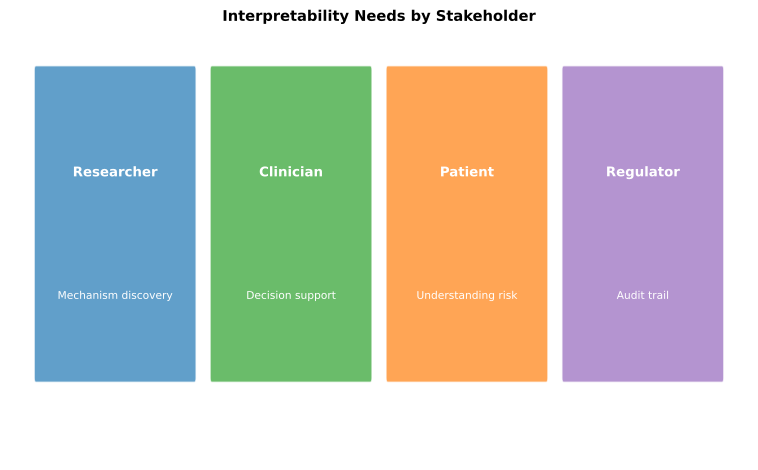
| Who needs the explanation? | Researcher, clinician, patient, regulator |
| Why is explanation needed? | Debugging, trust, scientific insight, compliance |
| When in the pipeline? | Training, validation, deployment, post-hoc |
| Where in the model? | Input attribution, hidden representations, output |
| How is explanation generated? | Perturbation, gradient, attention, probing |
This 5W1H framework clarifies that different stakeholders require different explanations. A researcher seeking mechanistic insight needs faithful attribution methods; a clinician needs calibrated confidence and actionable categories; a regulator needs audit trails and reproducibility documentation. No single interpretability approach serves all purposes.
Model-driven interpretability explains any model post-hoc; task-driven interpretability designs inherently interpretable architectures. Foundation models require model-driven approaches due to their scale and complexity, though architectural choices (attention mechanisms, modular components) increase inherent interpretability.
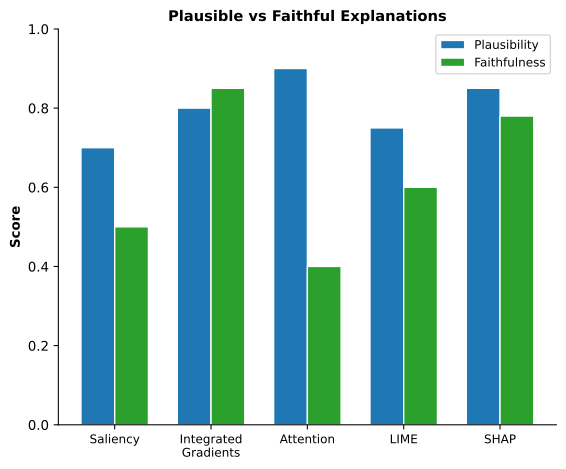
An attribution method highlights a GATA motif when explaining why a model predicts enhancer activity. The explanation is biologically plausible: GATA transcription factors bind this motif and drive tissue-specific expression. But plausibility is not faithfulness. The model may have learned a completely different pattern (perhaps GC content correlating with enhancer labels in the training data) and the attribution method may be highlighting the GATA motif because human-interpretable explanations tend to find human-interpretable patterns. The explanation matches biological intuition without accurately reflecting model computation. This distinction between plausible and faithful interpretation structures the entire field of model interpretability, and failing to respect it produces explanations that provide false comfort rather than genuine insight.
The stakes extend beyond scientific curiosity. Variant interpretation guidelines from the American College of Medical Genetics require that computational evidence be weighed alongside functional assays, segregation data, and population frequency (see Chapter 29 for detailed discussion of the ACMG-AMP framework). A pathogenicity score alone satisfies only weak evidence criteria; knowing that a variant disrupts a specific CTCF binding site in a cardiac enhancer provides interpretable mechanistic evidence that can be combined with clinical presentation and family history. When models cannot explain their predictions faithfully, clinicians cannot integrate computational evidence with biological reasoning. The same limitation affects research: a model that predicts enhancer activity cannot generate testable hypotheses about regulatory grammar unless its internal computations can be translated into statements about motifs, spacing constraints, and combinatorial logic that can be experimentally validated.
Attribution methods identify important input positions. Motif discovery algorithms translate attributions into regulatory vocabularies. Probing classifiers diagnose what representations encode. Mechanistic interpretability traces computational circuits within transformer architectures. Throughout, the plausible-versus-faithful distinction guides interpretation. We examine how to validate interpretability claims experimentally, distinguishing explanations that accurately reflect model computation from those that merely satisfy human intuition. Understanding when these diverge determines whether model explanations accelerate discovery or mislead researchers pursuing patterns the model never actually learned.
25.1 Attribution Methods and Input Importance
When a model predicts that a 200-kilobase genomic region will show high chromatin accessibility in hepatocytes, a natural question arises: which bases within that region drive the prediction? Attribution methods answer this question by assigning importance scores to input positions, identifying where the model focuses its computational attention. These scores can reveal candidate regulatory elements, highlight the sequence features underlying variant effects, and provide the raw material for downstream motif discovery.
25.1.1 In Silico Mutagenesis
The most direct approach to measuring input importance is simply to change each base and observe what happens to the prediction. In silico mutagenesis (ISM) systematically introduces mutations at every position, computing the difference between mutant and reference predictions. For a sequence of length L, ISM creates three mutant sequences at each position (substituting each non-reference nucleotide), yielding 3L forward passes through the model. The resulting mutation effect matrix captures how sensitive the prediction is to changes at each position and to each alternative base.
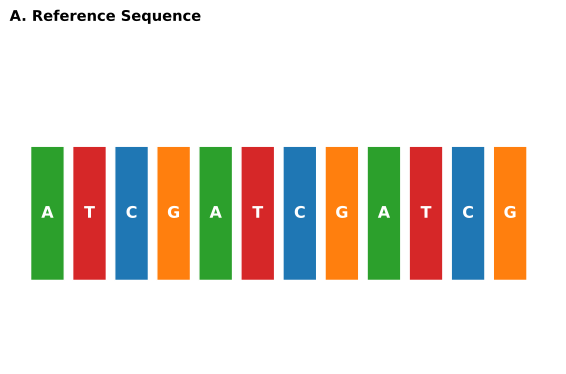
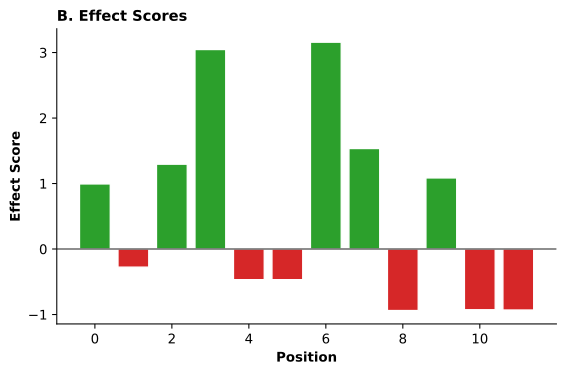
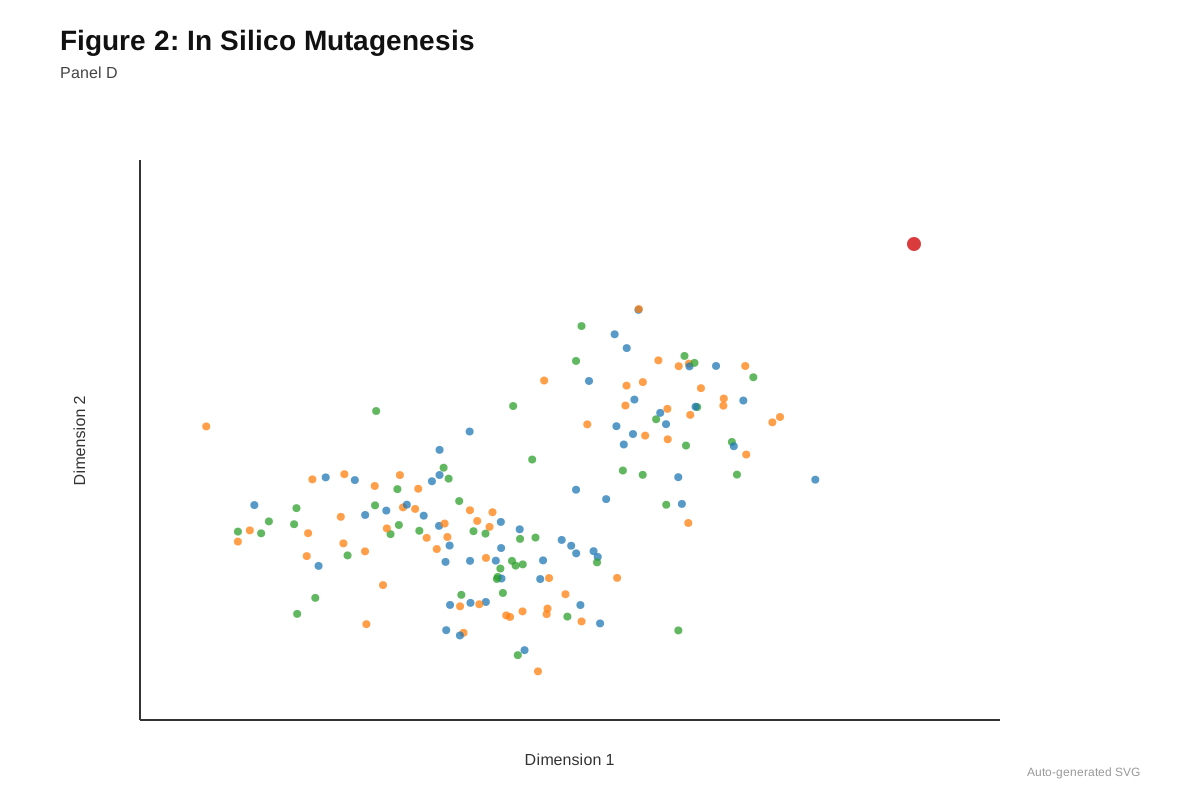
ISM provides true counterfactual information rather than approximations. When ISM shows that mutating position 47 from A to G reduces the predicted accessibility by 0.3 log-fold, that is a direct observation about model behavior, not an estimate derived from gradients or attention weights. This directness makes ISM the gold standard for faithfulness: if ISM identifies a position as important, perturbing that position genuinely changes the output.
The limitation is computational cost. Scoring all single-nucleotide substitutions in a 200-kilobase input requires 600,000 forward passes, which becomes prohibitive for large models or genome-wide analysis. Practical applications often restrict ISM to targeted windows around variants of interest, using faster methods to identify candidate regions for detailed analysis. For variant effect prediction specifically, ISM reduces to comparing reference and alternative allele predictions, requiring only two forward passes per variant. This forms the computational basis for zero-shot variant scoring in foundation models (Section 18.1.1), where the difference between wild-type and mutant log-likelihoods directly measures predicted effect.
Before reading the next section on gradient-based methods, consider: if ISM provides the most faithful importance scores, why would we ever use anything else? What properties would an alternative method need to be useful in practice?
Hint: Think about computational cost, but also about what types of patterns each method can and cannot detect.
25.1.2 Gradient-Based Attribution
Gradient-based methods approximate the counterfactual information from ISM using backpropagation. The gradient of the output with respect to each input position measures how much an infinitesimal change at that position would affect the prediction. With one-hot encoded sequence, the gradient at each base indicates the sensitivity to substituting that nucleotide.
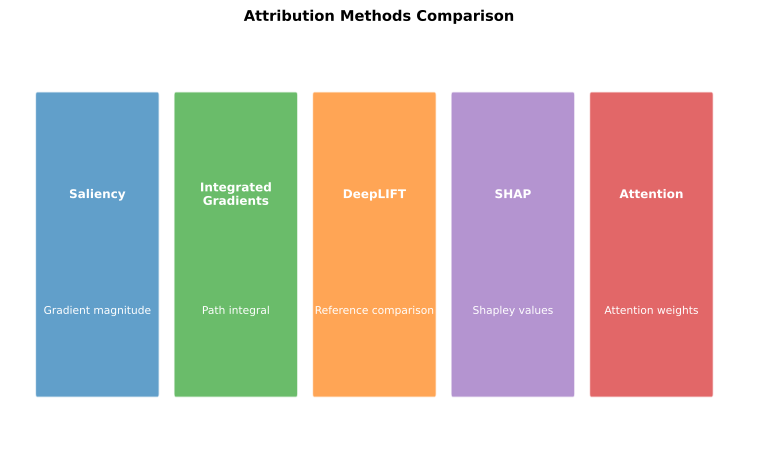
The simplest approach, often called saliency mapping, computes raw gradients and visualizes their magnitudes across the sequence. A common variant multiplies gradients by inputs (gradient \(\times\) input), focusing on positions where the current nucleotide is both important and present. These methods require only a single backward pass, making them orders of magnitude faster than ISM.
Gradient-based methods suffer from saturation in regions where the model is already confident. If a strong motif drives the prediction into a saturated region of the output nonlinearity, small perturbations produce near-zero gradients even though the motif is functionally critical. DeepLIFT addresses this limitation by comparing activations between an input sequence and a reference, propagating differences through the network using custom rules that avoid gradient saturation. The resulting attributions satisfy a completeness property: contributions sum to the difference between input and reference predictions (Shrikumar, Greenside, and Kundaje 2017).
Attribution methods derive from sensitivity analysis and feature importance work in neural networks (Samek et al. 2019). Layer-wise Relevance Propagation (LRP) decomposes predictions backward through the network, assigning relevance scores that sum to the output value. The conservation property (total relevance equals total prediction) guarantees consistency that gradient methods lack. Bach and colleagues established LRP for image classification (Bach et al. 2015); adaptations for sequence models replace pixel relevance with nucleotide or token relevance. For genomic foundation models, LRP can complement gradient-based methods by providing different perspectives on the same prediction, with agreement across methods increasing confidence in identified important positions.
A critical limitation of gradient-based methods is saturation: when a model is highly confident in its prediction, gradients become very small even for positions that are functionally essential. This happens because gradients measure sensitivity to infinitesimal changes, but a saturated sigmoid or softmax barely changes regardless of the perturbation size. A GATA motif that drives 95% of the prediction might show near-zero gradients because the model is already “certain.” This is why ISM (which measures finite perturbation effects) often reveals importance that gradients miss.
Integrated gradients provide theoretical grounding through the path integral of gradients along a linear interpolation from reference to input (Sundararajan, Taly, and Yan 2017):
\[ \text{IG}_i(\mathbf{x}) = (x_i - x'_i) \int_{\alpha=0}^{1} \frac{\partial f(\mathbf{x}' + \alpha(\mathbf{x} - \mathbf{x}'))}{\partial x_i} \, d\alpha \tag{25.1}\]
where:
- \(\mathbf{x}\) is the input sequence
- \(\mathbf{x}'\) is the reference sequence (e.g., shuffled or zero baseline)
- \(\alpha \in [0, 1]\) interpolates between reference and input
- \(f(\cdot)\) is the model’s prediction function
- In practice, approximated by: \(\text{IG}_i \approx (x_i - x'_i) \cdot \frac{1}{m} \sum_{k=1}^{m} \frac{\partial f(\mathbf{x}' + \frac{k}{m}(\mathbf{x} - \mathbf{x}'))}{\partial x_i}\) with \(m = 20\)-\(50\) steps
This integral, approximated by summing gradients at discrete interpolation steps, satisfies sensitivity (any input that affects the output receives nonzero attribution) and implementation invariance (functionally equivalent networks produce identical attributions). Integrated gradients have become a standard choice for genomic models, balancing computational efficiency with theoretical guarantees.
All gradient-based methods require choosing a reference sequence, which substantially affects the resulting attributions. Common choices include dinucleotide-shuffled versions of the input (preserving local composition while disrupting motifs), average non-functional sequence, or simply zeros. The reference defines what counts as informative: attributions highlight features that differ from the reference and contribute to the prediction difference. A shuffled reference emphasizes motif content; a zero reference treats any sequence information as potentially important.
The choice of reference sequence fundamentally shapes attribution results. Three common approaches:
Human Reference Genome (HRG): Uses the GRCh38 or similar assembly sequence at the corresponding genomic position. Attributions reveal variant-specific effects relative to the population consensus. Best for clinical variant interpretation where you want to know “how does this patient’s allele differ from the reference?”
Dinucleotide-Shuffled: Randomly permutes the input sequence while preserving dinucleotide frequencies (and thus GC content and local composition). Attributions highlight motif content that distinguishes the true sequence from compositionally matched noise. Best for motif discovery where you want to identify functional elements regardless of variant status. Generated by:
- Build a graph where each dinucleotide is a node
- Traverse edges randomly to reconstruct a shuffled sequence
- Repeat to generate multiple shuffled references for averaging
Neutral/Zero Baseline: Uses all-zeros (for one-hot encoding) or a uniform 0.25 probability at each position. Treats any sequence information as potentially informative. Can be problematic because it attributes importance to basic sequence composition that is constant across all inputs.
Practical guidance: For variant effect prediction, use HRG to measure allele-specific effects. For motif discovery, use shuffled references to focus on functional elements. Always report which reference was used, as results are not comparable across reference choices.
The following table summarizes the key properties of attribution methods to help guide method selection:
| Method | Forward Passes | Faithfulness | Limitations | Best Use Case |
|---|---|---|---|---|
| ISM | 3L per sequence | High (direct measurement) | Computationally expensive | Validating importance in targeted regions |
| Gradient \(\times\) Input | 1 backward pass | Low-Medium | Saturation, local approximation | Fast initial screening |
| DeepLIFT | 1 pass (custom) | Medium | Reference-dependent | Attribution with completeness guarantees |
| Integrated Gradients | 10-50 passes | Medium-High | Reference-dependent, slower | Principled attribution with efficiency |
25.1.3 Reconciling Attribution Methods
Different attribution methods can produce strikingly different importance maps for the same sequence and prediction. A position might show high importance under ISM but near-zero gradients due to saturation, or high gradient magnitude but minimal effect when actually mutated due to redundancy with nearby positions. This disagreement reflects genuine differences in what each method measures: gradients capture local sensitivity, ISM captures counterfactual effects, and DeepLIFT captures contribution relative to a reference.
Practical workflows often combine multiple methods. Gradient-based approaches efficiently scan long sequences to identify candidate regions, ISM validates importance in targeted windows, and agreement across methods increases confidence that identified features genuinely drive predictions. Disagreement flags positions for closer investigation, potentially revealing saturation effects, redundancy, or artifacts in individual methods.
25.2 Interpreting Convolutional Filters
Convolutional neural networks remain central to genomic sequence modeling, as discussed in Chapter 6, and their first-layer filters offer a particularly tractable interpretability target. Each filter slides along the sequence computing dot products with local windows, and high activation indicates that the local sequence matches the filter’s learned pattern. This architecture creates a natural correspondence between filters and sequence motifs.
25.2.1 From Filters to Position Weight Matrices
Converting learned filters to interpretable motifs follows a standard workflow. The trained model processes a large sequence set, typically training data or genome-wide tiles, recording positions where each filter’s activation exceeds a threshold. The fixed-length windows around high-activation positions are extracted and aligned, and nucleotide frequencies at each position are computed to build a position weight matrix (PWM). This PWM can be visualized as a sequence logo and compared to curated databases of transcription factor binding motifs. JASPAR (Castro-Mondragon et al. 2022) provides open-access, manually curated, non-redundant profiles for eukaryotic transcription factors, while HOCOMOCO (Kulakovskiy et al. 2018) offers comprehensive human and mouse motif collections derived from large-scale ChIP-seq analysis. Matching discovered PWMs against these databases identifies which known transcription factors the model has learned to recognize.
When this procedure is applied to models trained on chromatin accessibility or transcription factor binding, first-layer filters frequently match known transcription factor motifs. DeepSEA filters include recognizable matches to CTCF, AP-1, and cell-type-specific factors (Zhou and Troyanskaya 2015). This correspondence validates that models discover biologically meaningful patterns rather than arbitrary correlations, and it provides a direct link between model weights and decades of experimental characterization of transcription factor binding preferences.
Several complications affect filter interpretation. DNA is double-stranded, and models may learn forward and reverse-complement versions of the same motif as separate filters. Some filters capture general sequence composition (GC-rich regions, homopolymer runs) rather than specific binding sites. These patterns can be biologically meaningful in contexts like nucleosome positioning or purely artifactual depending on the training task. Distinguishing informative filters from compositional shortcuts requires cross-referencing with known biology and testing whether filter-derived motifs predict binding in held-out data.
Consider a CNN trained to predict CTCF binding from DNA sequence. You extract the top-activated sequences for one filter and find they all contain the pattern CCGCGNGGNGGCAG (where N represents any nucleotide; this matches the canonical CTCF consensus motif from JASPAR MA0139.1).
- How would you determine if this filter is recognizing the forward or reverse-complement CTCF motif?
- If another filter shows high activation for poly-G stretches, what follow-up analysis would distinguish whether this reflects true CTCF biology versus a training data artifact?
- Why might the model learn separate filters for the same motif in different orientations, even though CTCF binding is largely orientation-independent at the ChIP-seq level?
Check the reverse complement of the discovered pattern against known CTCF motifs in JASPAR.
Test whether removing poly-G sequences reduces prediction accuracy for CTCF binding in held-out data, and check whether poly-G enrichment correlates with GC content or mappability artifacts in the training set.
CNNs without explicit reverse-complement architecture learn separate filters because the convolution operation treats forward and reverse strands as independent patterns, even when biology treats them equivalently.
25.2.2 Deeper Layers and Combinatorial Patterns
Beyond the first layer, convolutional filters combine lower-level patterns into complex representations. Deeper layers can encode motif pairs that co-occur at characteristic spacing, orientation preferences between binding sites, and contextual dependencies where a motif’s importance varies with surrounding sequence. These combinatorial patterns capture aspects of regulatory grammar that individual motifs cannot represent.
Direct interpretation of deeper filters becomes increasingly difficult as receptive fields expand and nonlinearities accumulate. The activation of a layer-5 filter depends on intricate combinations of earlier patterns, resisting simple biological annotation. Indirect approaches prove more tractable: analyzing which input regions drive high activation at deeper layers, clustering high-activation sequences to find common themes, or probing whether deeper representations encode specific biological properties.
25.3 Motif Discovery from Attributions
Attribution maps highlight important positions but do not directly reveal motifs. A DeepLIFT track might show scattered high-importance bases throughout a sequence without indicating that those bases collectively form instances of the same transcription factor binding site. TF-MoDISco (Transcription Factor Motif Discovery from Importance Scores) bridges this gap by discovering motifs from attribution scores rather than raw sequences (Shrikumar et al. 2018).
Traditional motif discovery algorithms (like MEME) scan raw sequences and must contend with a fundamental problem: most positions in regulatory sequences do not participate in functional motifs. The algorithm wastes effort on irrelevant positions and may find patterns that happen to be overrepresented but have no functional significance. TF-MoDISco solves this by using attribution scores to weight the search: positions the model actually uses for prediction get prioritized, while unimportant positions contribute minimally. This importance-weighted approach discovers the motifs that drive model predictions, not just patterns that occur frequently.
The insight underlying TF-MoDISco is that importance-weighted sequences focus motif discovery on positions the model actually uses. Traditional motif finders must contend with the fact that most positions in regulatory sequences do not participate in functional motifs. By extracting seqlets (short windows where total importance exceeds a threshold) and clustering them based on both sequence content and importance profiles, TF-MoDISco identifies patterns that drive model predictions.
The workflow proceeds through several stages. Base-level importance scores are computed for many sequences using DeepLIFT, ISM, or integrated gradients. Windows where total importance exceeds a threshold are extracted as seqlets, each representing a candidate motif instance. These seqlets are compared using metrics that consider both sequence content and importance profiles, then clustered into groups corresponding to putative motifs. Within each cluster, seqlets are aligned and consolidated into PWMs and importance-weighted logos. The resulting motifs can be matched to known transcription factors or flagged as novel patterns.
Beyond individual motifs, TF-MoDISco enables grammar inference by analyzing motif co-occurrence. Mapping discovered motif instances back to genomic coordinates reveals characteristic spacing between motif pairs, orientation preferences, and cell-type-specific usage patterns. These grammatical rules can be validated through in silico experiments: inserting or removing motifs in synthetic sequences and checking whether predictions change as expected.
Applications to models like BPNet trained on ChIP-seq data have recovered known transcription factor motifs, discovered novel sequence variants, and revealed spacing constraints validated through synthetic reporter assays. The same workflow applies to foundation model analysis: use the model to produce base-level attributions for a downstream task, run TF-MoDISco to extract a task-specific motif vocabulary, and analyze how motif usage varies across conditions.
Scenario: You have trained a model to predict liver enhancer activity and want to understand what sequence features it uses.
Step 1: Compute attributions Run integrated gradients on 10,000 predicted enhancer sequences (selecting sequences with high prediction scores). This produces a 4 × L attribution matrix for each sequence, where L is sequence length.
Step 2: Extract seqlets Scan each attribution profile for windows where summed importance exceeds a threshold (e.g., top 5% of all windows). A typical 500bp enhancer might yield 3-5 seqlets of 15-25bp each.
Step 3: Cluster seqlets Using both sequence similarity and attribution profile similarity, cluster the ~40,000 extracted seqlets. Suppose this produces 12 distinct clusters.
Step 4: Generate motifs For each cluster, align seqlets and compute position weight matrices. Results might include:
| Cluster | # Seqlets | Top JASPAR Match | Match Score |
|---|---|---|---|
| 1 | 8,200 | HNF4A | 0.92 |
| 2 | 5,100 | CEBPA | 0.89 |
| 3 | 3,400 | FOXA1 | 0.85 |
| 4 | 2,800 | Novel (no match > 0.7) | N/A |
Step 5: Validate The HNF4A and CEBPA motifs are known liver-specific transcription factors, confirming the model learned biologically relevant features. Cluster 4 represents a potential novel regulatory element requiring experimental validation.
Interpretation: The model relies heavily on canonical liver transcription factor binding sites, consistent with known liver enhancer biology. The novel motif warrants ChIP-seq or MPRA follow-up.

25.4 Probing Learned Representations
Attribution methods ask which input positions matter; probing asks what information the model’s internal representations encode. The approach resembles asking a student to “show their work” on an exam: if they can correctly answer follow-up questions about intermediate steps, they likely understood the underlying concepts rather than memorizing answers. A probing classifier is a simple supervised model (typically linear) trained to predict some property of interest from the hidden representations of a pretrained model. If a linear probe can accurately predict a property, that property is encoded in an accessible form within the representation: the model “knows” this information in a way that can be easily extracted.
25.4.1 Probing Methodology
The standard probing workflow extracts hidden states from a pretrained model for a set of inputs where the property of interest is known. These hidden states, without further transformation, serve as features for training a simple classifier to predict the property. The classifier’s accuracy indicates how well the representation encodes the probed property, while its simplicity (linearity, minimal parameters) ensures that the probe identifies information present in the representation rather than information the probe itself computes.
For protein language models like ESM-2, probing has revealed that representations encode secondary structure, solvent accessibility, contact maps, and even 3D coordinates to a surprising degree, as discussed in Chapter 16. These properties emerge despite training on sequence alone, demonstrating that masked language modeling on evolutionary sequences induces representations that capture structural information. For DNA language models (see Chapter 15), probing can assess whether representations encode chromatin state, gene boundaries, promoter versus enhancer identity, or species-specific regulatory signatures.
Probing provides diagnostic information distinct from downstream task performance. A model might achieve high accuracy on a regulatory prediction task by learning shortcuts (correlations with GC content, distance to annotated genes) rather than encoding genuine regulatory grammar. Probing can detect such shortcuts: if representations strongly encode GC content but weakly encode transcription factor binding site presence, the model may be exploiting composition rather than sequence logic. This diagnostic function complements the confounder analysis discussed in Chapter 13.
You train a DNA language model on human genome sequences, then probe its representations to understand what it has learned. You find:
- Linear probe for GC content: 95% accuracy
- Linear probe for promoter vs. enhancer: 78% accuracy
- Linear probe for tissue-specific enhancer activity: 52% accuracy
What do these results suggest about the model’s representations? Before reading further, consider:
- Which result is most concerning for downstream variant effect prediction?
- How would you distinguish whether the promoter/enhancer probe reflects genuine regulatory learning versus correlation with GC content?
- What additional probing experiments would you design?
25.4.2 Limitations of Probing
Probing results require careful interpretation. A probe’s failure to predict some property might indicate that the representation does not encode it, or might reflect limitations of the probe architecture, insufficient training data, or mismatch between the probe’s capacity and the complexity of the encoding. Linear probes may miss nonlinearly encoded information; more complex probes risk learning the property themselves rather than reading it from the representation.
This concept is subtle but important. A representation can encode information in two fundamentally different ways:
- Accessible encoding: A simple (linear) probe can extract the information. The representation makes the property easy to read.
- Selective encoding: The information is present but requires nonlinear decoding. The property is represented but not prominently exposed.
The challenge: if you use a more powerful (nonlinear) probe to detect selective encoding, how do you know the probe is reading information from the representation versus computing it from scratch? This is an active area of methodological research with no perfect solution. Best practice: compare probe performance to a control where the same probe is trained on random representations. If performance drops substantially, the original representation genuinely encoded the property.
The selectivity-accessibility tradeoff complicates interpretation. A representation might encode a property accessibly (recoverable by a linear probe) or selectively (encoded but requiring nonlinear decoding). Properties encoded selectively might be present but not easily extracted, while properties encoded accessibly might be incidentally correlated with the training objective rather than causally important. Combining probing with causal interventions (ablating representation components and measuring effects on downstream predictions) provides stronger evidence about which encoded properties actually matter.
25.4.3 Adapting NLP Interpretability Methods
The natural language processing community has developed extensive methodologies for understanding transformer models, collectively termed “BERTology” (Rogers, Kovaleva, and Rumshisky 2021). BERTology-inspired techniques can be adapted for genomic models: attention pattern analysis (see Chapter 7 for background), probing classifiers for biological properties, and layer-wise representation analysis all draw from this tradition.
However, genomic models differ from language models in ways that complicate direct transfer. Attention heads in genomic models may learn motif relationships, chromatin domain structure, or evolutionary constraints, but the biological meaning of these learned patterns remains an open question. Unlike language where human intuition provides ground truth (“this attention head seems to capture subject-verb agreement”), genomic interpretations require experimental validation to confirm that model-identified patterns reflect genuine biology rather than statistical artifacts.
25.5 Attention Patterns in Transformer Models
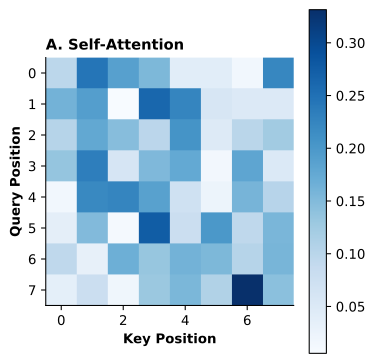
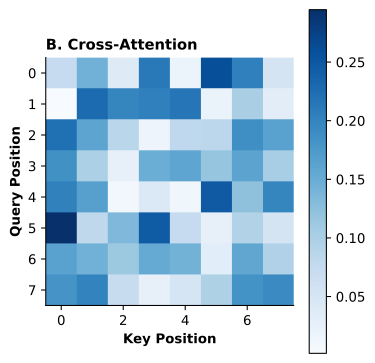
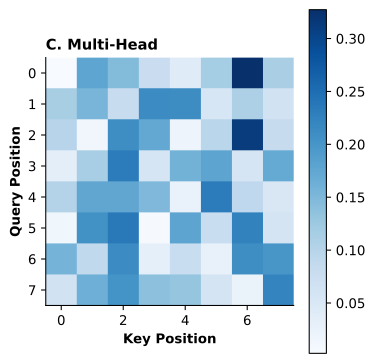
Transformer-based genomic models use self-attention to aggregate information across long sequence contexts (see Chapter 7 for architectural details), potentially capturing distal regulatory interactions invisible to models with narrow receptive fields. Attention weights indicate which positions each position attends to, creating natural candidates for interpretability: perhaps high attention weights identify functionally related sequence elements.
25.5.1 What Attention Patterns Reveal
When attention weights are analyzed in genomic language models, certain heads exhibit strikingly structured patterns. Some heads preferentially connect positions within the same predicted gene or operon, suggesting the model has learned gene boundaries from sequence alone. Other heads show long-range connections that align with known enhancer-promoter relationships or chromatin loop anchors. Still others cluster positions by functional annotation, connecting genes with similar Gene Ontology terms despite lacking explicit functional labels during training.
In models like Enformer that predict regulatory outputs from long genomic windows (see Section 17.2), attention can reveal which distal regions influence predictions at a target gene. Contribution scores aggregated across attention heads often peak at known enhancers, insulators, and chromatin domain boundaries. These patterns suggest that the model has learned aspects of regulatory architecture from the correlation between sequence and chromatin output labels.
25.5.2 Why Attention Weights Mislead
Raw attention weights require skeptical interpretation. High attention between two positions indicates information flow in the model’s computation but does not necessarily indicate causal influence on predictions. Attention serves multiple computational roles beyond identifying important features: routing information for intermediate computations, implementing positional reasoning, and satisfying architectural constraints. A position receiving high attention might be used for bookkeeping rather than contributing to the final output.
The most common interpretability mistake with transformers is treating attention weights as importance scores. This is seductive because attention weights are easy to extract and visualize, and high-attention patterns often look biologically plausible. But attention describes information routing, not causal contribution. Consider this analogy: in a complex recipe, you might frequently consult the measurements section (high “attention”) while the actual flavor comes from the spice section (low “attention” but high importance). To know if an attention pattern matters, you must perturb it and measure the prediction change. Attention without perturbation is correlation without causation.
Several specific issues undermine naive attention interpretation. Attention weights describe information movement before value vectors are applied; positions with high attention but small value vector magnitudes contribute little to the output. Multi-head attention averages across heads with different functions; examining average attention obscures specialized head behavior. Cross-layer effects mean that the importance of early-layer attention depends on what later layers do with the routed information.
More robust approaches combine attention analysis with perturbation experiments. If deleting a position that receives high attention changes the prediction substantially, the attention is functionally meaningful. If deletion has minimal effect, the attention may serve computational purposes unrelated to the target output. Attention rollout and attention flow methods propagate attention through layers to better capture information movement across the full network, though these too provide correlational rather than causal evidence.
25.5.3 Systematic Attention Analysis for Genomic Transformers
A heatmap showing that a promoter-proximal position attends strongly to a distal CTCF motif suggests the model has learned enhancer-promoter looping. But does it? Attention weights indicate where the model looks, not whether looking there was necessary for the prediction. A systematic framework for interpreting attention patterns in genomic contexts addresses this gap (attention_interpretability_2025?).
The framework distinguishes three types of attention heads based on what they compute. The framework distinguishes these types computationally by analyzing attention weight distributions: positional heads show distance-dependent decay, compositional heads correlate with k-mer similarity, and functional heads cluster by biological annotation. Positional heads attend based on distance, recreating convolution-like local windows regardless of sequence content. These heads capture short-range dependencies (splice sites, transcription factor binding) where proximity determines function. Compositional heads attend based on sequence similarity, linking positions with related k-mer content. These heads discover motif co-occurrence (GATA + FOX + SMAD in cardiac enhancers) and repeated elements. Functional heads attend based on learned regulatory relationships, connecting enhancers to target promoters, silencers to repressed genes, and boundary elements to loop anchors.
The paper introduced a GPT-4-assisted workflow for attention head interpretation. The five-step process:
- Extract attention patterns for 1,000 diverse genomic sequences
- Cluster heads by attention distribution similarity (cosine distance)
- Generate natural language descriptions of each cluster’s typical pattern
- Use GPT-4 to propose biological functions matching each pattern
- Validate proposed functions through ablation (zero out head, measure task performance drop)
This automation enables systematic analysis of models with hundreds of attention heads, where manual inspection would be infeasible. The validation step (ablation) distinguishes necessary heads from incidental ones.
Validation experiments demonstrate which attention patterns are causal versus correlational. The study compared attention-based importance scores to perturbation-based ground truth (in silico mutagenesis). Functional heads showed high concordance (Spearman r > 0.7 between attention weight and ISM effect size); positional and compositional heads showed weak concordance (r < 0.3). This quantifies a critical limitation: attention is not inherently interpretable, but systematic analysis can identify which heads provide faithful explanations.
The practical output is an interpretability recipe: analyze attention heads in aggregate rather than individually, cluster by computational pattern rather than biological intuition, validate proposed functions through ablation, and report concordance with perturbation-based ground truth. This transforms attention visualization from suggestive figures to rigorous interpretability claims.
25.6 Regulatory Vocabularies and Global Interpretability
Local interpretability methods explain individual predictions; global interpretability characterizes what a model has learned across its entire training distribution. For genomic models trained to predict thousands of chromatin features, global interpretability asks whether the model has learned a coherent vocabulary of regulatory sequence classes and how those classes map to biological programs.
25.6.1 Sequence Classes from Sei
Sei exemplifies the global interpretability approach by learning a vocabulary of regulatory sequence classes that summarize chromatin profile diversity across the genome (see Section 17.4 for architectural details). The model predicts tens of thousands of chromatin outputs (transcription factor binding, histone modifications, accessibility across cell types), then compresses this high-dimensional prediction space into approximately 40 sequence classes through dimensionality reduction and clustering.
Each sequence class corresponds to a characteristic regulatory activity pattern. Some classes show promoter-like signatures (H3K4me3, TSS proximity, broad expression). Others exhibit enhancer patterns (H3K27ac, H3K4me1, cell-type-restricted activity). Repressive classes display H3K27me3 or H3K9me3 enrichment. Cell-type-specific classes capture lineage-restricted regulatory programs (neuronal, immune, hepatic). This vocabulary transforms thousands of raw chromatin predictions into a compact, interpretable representation.
Variants can be characterized by their effects on sequence class scores, yielding functional descriptions more informative than raw pathogenicity predictions. A variant that shifts a region from enhancer-like to promoter-like class, or from active to repressive, provides mechanistic hypotheses about its functional consequences. Genome-wide association study (GWAS) enrichment analysis can identify which sequence classes are overrepresented among disease-associated variants, revealing the regulatory programs most relevant to specific phenotypes (see Chapter 3 for GWAS foundations).
Consider a foundation model that predicts tissue-specific enhancer activity across 100 cell types.
- What would a local interpretability analysis tell you about a specific variant in a cardiac enhancer?
- What would a global interpretability analysis (like Sei’s sequence classes) tell you about the same variant?
- In what clinical scenario would you prefer local interpretability? In what research scenario would global interpretability be more valuable?
Think about the difference between explaining one prediction versus characterizing the model’s overall regulatory vocabulary.
Local analysis (attribution methods) would identify which specific nucleotides the variant disrupts and what motifs are affected: for example, “variant disrupts a GATA4 binding site at position 142.”
Global analysis would show how the variant shifts regulatory program membership: for example, “variant shifts sequence class from cardiac-specific enhancer to generic promoter-like.”
Prefer local for clinical variant interpretation where you need mechanistic detail for a specific case; prefer global for GWAS follow-up where you want to understand which regulatory programs are disease-relevant across many variants.
25.6.2 Embedding Geometry and Regulatory Programs
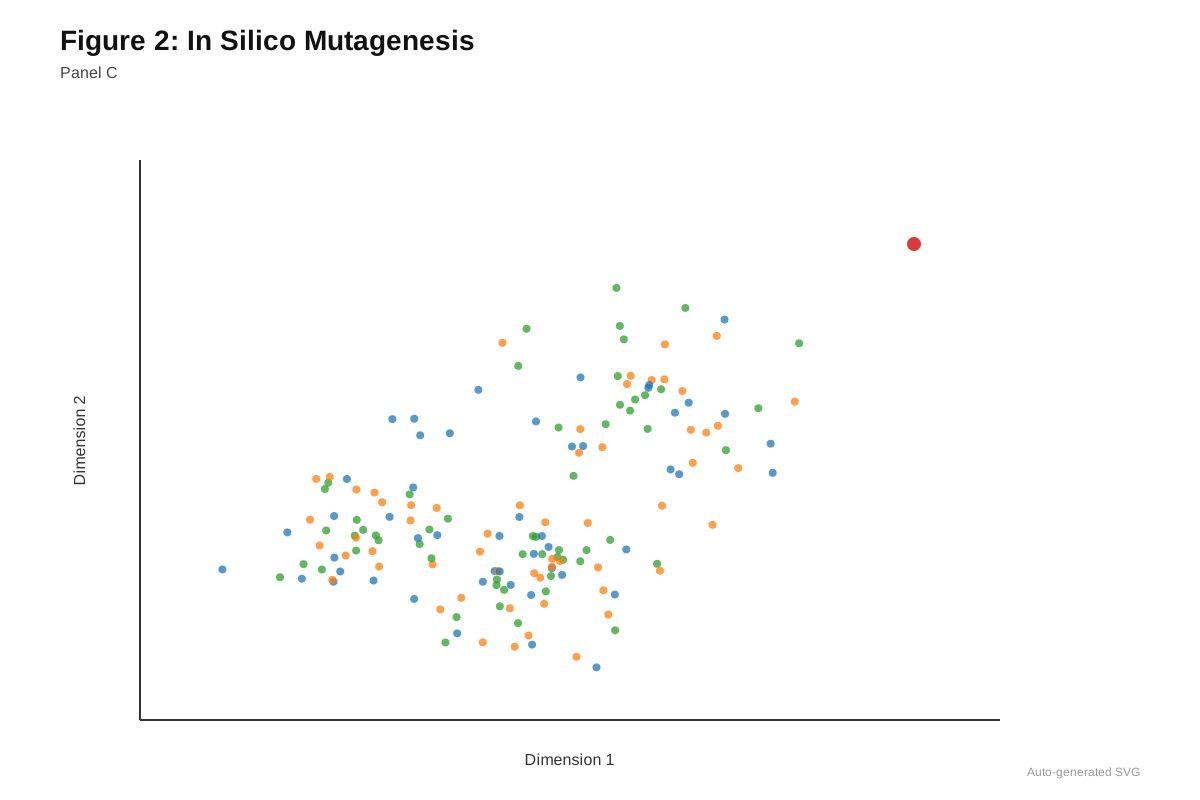
Beyond discrete sequence classes, the continuous geometry of learned representations encodes regulatory relationships. Sequences with similar regulatory functions cluster in embedding space; directions in this space correspond to biological axes of variation. Dimensionality reduction techniques (UMAP, t-SNE, principal component analysis) visualize these relationships, revealing how the model organizes regulatory diversity.
For foundation models trained on diverse genomic tasks, embedding geometry can capture cross-task relationships. Sequences that function as enhancers in one cell type might cluster near sequences with enhancer function in related cell types, even if trained independently. Variants that disrupt shared regulatory logic should produce similar embedding perturbations. These geometric properties enable transfer of interpretability insights across tasks and provide compact summaries of model knowledge.
25.7 Mechanistic Interpretability
Classical interpretability methods treat models as input-output functions, probing what they compute without examining how they compute it. Mechanistic interpretability takes a different approach, attempting to reverse-engineer the algorithms implemented by neural network weights. Think of it like the difference between knowing that a car gets you from A to B versus opening the hood to understand how the engine, transmission, and fuel system work together. Classical interpretability tells you the car runs; mechanistic interpretability identifies which piston fires when and how the carburetor mixes fuel. This emerging field, most developed for language models, offers tools increasingly applicable to genomic foundation models.
Mechanistic interpretability represents the frontier of interpretability research. The concepts in this section are powerful but the techniques are still maturing. Current methods require substantial manual analysis, work best for small models, and have been validated primarily in language models rather than genomic models. As you read, focus on understanding the conceptual framework (circuits, features, superposition) rather than expecting turnkey tools. The field is evolving rapidly, and today’s research prototypes may become tomorrow’s standard practices.
25.7.1 Circuits and Features
The central hypothesis of mechanistic interpretability is that neural networks implement interpretable computations through identifiable circuits: connected subnetworks that perform specific functions. A circuit might detect whether a motif is present, compute the distance between two motifs, or integrate evidence across regulatory elements. Identifying circuits requires tracing information flow through the network and characterizing what each component contributes.
Features are the atomic units of this analysis: directions in activation space that correspond to interpretable concepts. In language models, features have been found that activate for specific topics, syntactic structures, or semantic properties. Analogous features in genomic models might activate for transcription factor binding sites, coding versus non-coding sequence, or regulatory element types. Sparse autoencoders trained on model activations can extract interpretable features by encouraging representations where most features are inactive for any given input.
Superposition complicates feature identification. Neural networks can represent more features than they have dimensions by using overlapping, nearly orthogonal directions. Why would networks do this? The answer lies in the statistics of natural data: most features are sparse (active for only a small fraction of inputs), so they rarely need to be represented simultaneously. By packing many sparse features into a lower-dimensional space using nearly orthogonal directions, networks can represent far more concepts than their dimensionality would naively suggest. Features active for different inputs can share parameters, enabling high-capacity representations but complicating interpretation: when we observe an activation pattern, multiple overlapping features may contribute. Techniques from compressed sensing and dictionary learning help decompose superposed representations into constituent features.
25.7.2 Applications to Genomic Models
Mechanistic interpretability remains nascent for genomic foundation models, but initial applications show promise. Attention head analysis in DNA language models has identified heads specialized for different genomic functions: some attend within genes, others across regulatory regions, still others implement positional computations . Probing activations at different layers reveals hierarchical feature construction, from local sequence patterns in early layers to long-range regulatory relationships in later layers.
Circuit analysis can explain specific model behaviors. If a model predicts that a variant disrupts regulation, mechanistic analysis can trace which features activate differently for reference versus variant sequence, which attention heads route information about the variant to the prediction, and which intermediate computations change. This mechanistic trace provides far richer explanation than attribution scores alone, potentially identifying the regulatory logic the model has learned.
The challenge is scalability. Current mechanistic interpretability techniques require substantial manual analysis and work best for small models or specific behaviors. Foundation models with billions of parameters resist exhaustive circuit enumeration. Developing automated tools for circuit discovery and scaling mechanistic analysis to large genomic models represents an active research frontier.
25.8 Validation: From Explanations to Experiments
Interpretability methods produce explanations, but explanations are only valuable if they accurately reflect model behavior and connect to biological reality. Validation closes the loop by testing whether interpretability-derived hypotheses hold when subjected to experimental scrutiny.
25.8.1 Faithfulness Testing
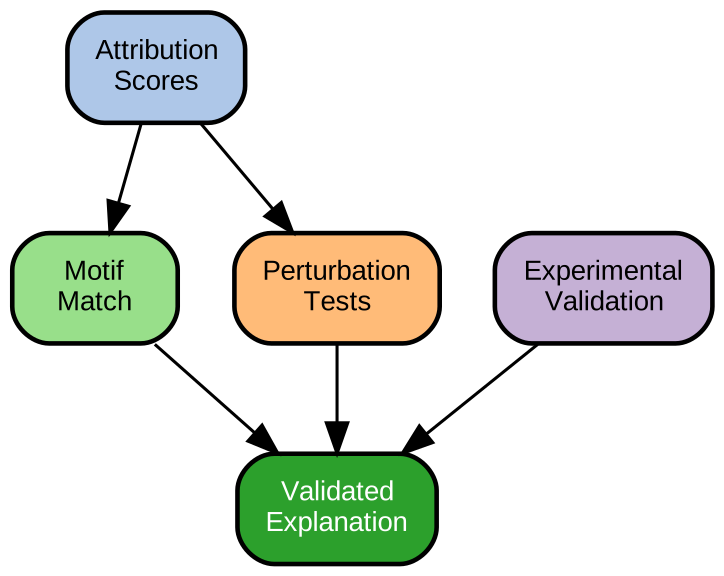
An interpretation is faithful if it accurately describes what the model does. Testing faithfulness requires interventions: changing the features identified as important and verifying that predictions change accordingly. If an attribution method highlights certain positions as driving a prediction, deleting or scrambling those positions should reduce the prediction. If discovered motifs are claimed to be necessary for regulatory activity, removing them from sequences should impair predicted and measured function.
These logical concepts are fundamental to validation but often confused:
Necessary condition: A feature is necessary for a prediction if removing it eliminates the prediction. Oxygen is necessary for fire: no oxygen, no fire. In interpretability: if ablating a motif eliminates enhancer prediction, the motif is computationally necessary for that prediction.
Sufficient condition: A feature is sufficient for a prediction if adding it alone produces the prediction. A match is sufficient to start a fire (given fuel and oxygen). In interpretability: if inserting a motif into neutral sequence creates enhancer prediction, the motif is computationally sufficient.
The critical distinction: A feature can be necessary without being sufficient (removing it breaks the prediction, but it alone cannot create the prediction), sufficient without being necessary (it can create the prediction, but other features can too), both, or neither.
Why this matters: Strong interpretability claims require demonstrating both:
- Necessity tests (ablation): Does removing the feature break predictions?
- Sufficiency tests (insertion): Does adding the feature create predictions?
A GATA motif might be sufficient for enhancer prediction in one model (inserting it activates enhancers) but not necessary (other motifs also work). Another model might learn GATA as necessary but not sufficient (GATA alone is not enough; it requires co-factors). Understanding which relationship holds determines what biological conclusions you can draw.
Sanity checks provide baseline validation. When model weights are randomized, attributions should degrade to uninformative noise. When training labels are scrambled, discovered motifs should disappear or lose predictive power. These checks identify methods that produce plausible-looking outputs regardless of model content, revealing explanations that reflect method biases rather than genuine model features.
Counterfactual experiments go further by testing whether identified features are sufficient as well as necessary. Inserting discovered motifs into neutral sequences should increase predicted regulatory activity if the motifs genuinely encode functional elements. Constructing synthetic sequences that combine motifs according to discovered grammatical rules should produce predictions consistent with those rules. Discrepancies between expected and observed effects indicate gaps in the interpretation.
The following table summarizes the hierarchy of validation tests, from weakest to strongest evidence:
| Validation Level | Test | What It Proves | What It Cannot Prove |
|---|---|---|---|
| Sanity Check | Random weights produce random attributions | Method is not trivially broken | Method accurately reflects model |
| Computational Necessity | Ablating feature reduces prediction | Feature is used by model | Feature is the only cause |
| Computational Sufficiency | Inserting feature increases prediction | Feature is sufficient in isolation | Feature is necessary or biologically meaningful |
| Biological Necessity | Experimental deletion (CRISPR) abolishes activity | Feature is biologically required | Model learned it correctly |
| Biological Sufficiency | Synthetic construct with feature is active | Feature is biologically sufficient | Model captured all relevant features |
25.8.2 Explanation Quality Metrics
Beyond faithfulness, explanation quality can be assessed along multiple dimensions from the XAI literature (Samek et al. 2019):
- Fidelity: Does the explanation accurately reflect model computation?
- Comprehensibility: Can the target audience understand the explanation?
- Sufficiency: Does the explanation contain enough information to reproduce the reasoning?
- Completeness: Are all relevant factors included?
In genomic models, these criteria become:
| Criterion | Genomic Test |
|---|---|
| Fidelity | Perturbing highlighted positions changes prediction |
| Comprehensibility | Explanations map to known biology (motifs, domains) |
| Sufficiency | Synthetic sequences matching explanations show predicted behavior |
| Completeness | No high-importance positions are missed by the explanation |
The Swartout and Moore criteria for explanation systems (Swartout and Moore 1993) (explicit representation, fidelity, and understandability) remain foundational for evaluating whether model explanations are scientifically useful rather than merely plausible.
25.8.3 Experimental Validation
The ultimate test of interpretability connects model-derived hypotheses to biological experiments. Motifs discovered through TF-MoDISco can be tested through electrophoretic mobility shift assays, ChIP-qPCR, or reporter constructs. Predicted spacing constraints can be validated by varying distances between motifs in synthetic constructs and measuring activity. Hypothesized enhancer-promoter connections can be tested through CRISPR deletion of predicted enhancers and measurement of target gene expression.
This experimental validation distinguishes genuine mechanistic discovery from pattern matching that happens to produce plausible-looking results. A model might learn that certain k-mers correlate with regulatory activity for confounded reasons (batch effects, mappability artifacts) yet produce motif logos resembling real transcription factors. Only experimental testing can determine whether model-derived hypotheses reflect causal regulatory logic.
High-throughput functional assays enable systematic validation at scale. Massively parallel reporter assays (MPRAs) can test thousands of model-predicted regulatory elements simultaneously. Perturb-seq combines CRISPR perturbations with single-cell RNA-seq to measure effects of knocking out predicted regulatory factors (see Section 20.3). These technologies create opportunities for iterative model improvement: interpretability generates hypotheses, experiments test them, and results refine both model architecture and training.
You have used integrated gradients and TF-MoDISco to analyze a model that predicts liver-specific enhancer activity. The analysis reveals that the model relies heavily on HNF4A and CEBP motifs, often appearing within 50bp of each other.
Before reading further, design a validation strategy:
- What computational experiments would test whether these motifs are necessary for the model’s predictions?
- What computational experiments would test sufficiency?
- What biological experiments would test whether the model’s reliance on these motifs reflects genuine liver regulatory logic?
- If the biological experiments fail to validate the model’s predictions, what are the possible explanations?
25.9 Interpretability in Clinical Variant Assessment
Variant interpretation guidelines require that computational predictions be weighed alongside experimental and clinical evidence, as discussed further in Chapter 29. Interpretability determines whether model predictions can contribute meaningful evidence beyond raw pathogenicity scores.
Current ACMG-AMP criteria allow computational evidence as supporting (PP3) or opposing (BP4) pathogenicity, but the evidence strength depends on understanding what the prediction reflects (Richards et al. 2015). The full ACMG-AMP framework and its integration with computational evidence is examined in Section 29.2. A splice site disruption score from SpliceAI provides interpretable mechanistic evidence: the variant is predicted to alter splicing because it changes the consensus splice site sequence (Section 6.5) (Jaganathan et al. 2019). This prediction can be evaluated against splice site models, tested with minigene assays, and combined with observations of aberrant transcripts in patient samples. The interpretation enables evidence integration.
When preparing computational evidence for clinical variant interpretation:
Always include the mechanism, not just the score. “Pathogenicity score: 0.92” is less useful than “Predicted to disrupt CTCF binding site (attribution score -0.8), shifting sequence class from insulator to neutral.”
Specify what was tested. Did you run ISM to validate the attribution? Did the motif match a known transcription factor? Is the affected sequence class enriched in relevant GWAS?
Acknowledge limitations explicitly. If the model was not trained on the relevant tissue type, or if the variant type (structural, repeat) was underrepresented in training, say so.
Suggest validation experiments. “This prediction could be validated by EMSA for CTCF binding or minigene assay for splicing effects.”
Cross-reference related evidence. Does the computational mechanism explain the patient’s phenotype? Is there functional data in ClinVar for nearby variants?
Foundation model predictions are less immediately interpretable but potentially more informative. A pathogenicity score from ESM-1v (Section 16.1) reflects evolutionary constraint inferred from protein language modeling, but the specific sequence features driving the prediction require attribution analysis to identify. The protein VEP paradigm is examined in Section 18.2. An expression effect predicted by Enformer (Section 17.2) might result from disrupted transcription factor binding, altered chromatin accessibility, or changed 3D regulatory contacts; interpretability analysis distinguishes these mechanisms and guides experimental validation. The DNA-based VEP approaches are detailed in Section 18.3.
For clinical utility, interpretability must be communicated effectively. Genome browsers displaying attribution tracks alongside variant calls help clinicians identify mechanistic hypotheses. Reports that accompany pathogenicity scores with regulatory vocabulary classifications (this variant shifts an enhancer toward a repressive state) provide actionable context. These communication challenges extend interpretability beyond algorithm development to user interface design and clinical workflow integration.
25.10 Practical Approaches for Foundation Model Analysis
Working with genomic foundation models requires matching interpretability methods to specific questions. Several complementary strategies address different aspects of model behavior.
For understanding variant effects, the primary goal is explaining why a specific variant receives a particular prediction. Attribution methods (ISM for validation, integrated gradients for efficiency) identify which input positions drive the difference between reference and alternative predictions. If the variant falls within a discovered motif, the interpretation is straightforward. If attributions spread across the sequence, the effect may operate through long-range regulatory changes requiring attention analysis or contribution scores from models like Enformer.
For characterizing model representations, probing classifiers diagnose what information is encoded and at which layers. Probing for known regulatory features (promoter versus enhancer, tissue specificity, evolutionary conservation) establishes which biological properties the model captures. Probing for potential confounders (GC content, distance to annotated genes, technical artifacts) identifies shortcuts that might inflate benchmark performance without reflecting genuine regulatory understanding (see Section 11.8 for benchmark limitations and Section 13.8 for confounder detection methods).
For discovering regulatory logic, TF-MoDISco applied to high-confidence predictions extracts motif vocabularies specific to prediction tasks or cell types. Grammar analysis of motif co-occurrence reveals combinatorial rules. Sei-style sequence class analysis situates local motifs within global regulatory programs. Comparing discovered vocabularies across models or training conditions reveals shared versus idiosyncratic features.
For debugging and auditing, interpretability methods identify what features drive predictions in held-out distributions. If a model fails on a new cell type, attribution analysis can reveal whether it relies on cell-type-specific versus generalizable features. If performance degrades on specific genomic regions, local interpretability can identify confounding patterns or training data gaps.
For generating experimental hypotheses, interpretability produces testable predictions. Discovered motifs can be synthesized and tested. Predicted regulatory elements can be perturbed. Hypothesized transcription factor binding can be validated by ChIP. Model-derived predictions that survive experimental testing represent genuine mechanistic insights; predictions that fail point toward model limitations or confounding.
The following table provides a decision framework for selecting interpretability methods based on your analysis goal:
| Goal | Primary Method | Supporting Methods | Validation Required |
|---|---|---|---|
| Explain single variant | Integrated gradients | ISM for verification | Motif match, literature |
| Find regulatory motifs | TF-MoDISco | Filter visualization | JASPAR match, MPRA |
| Diagnose model shortcuts | Probing classifiers | Attribution for confounders | Held-out distribution |
| Understand long-range effects | Attention analysis | Contribution scores | Perturbation experiment |
| Characterize model vocabulary | Sei-style clustering | Embedding geometry | GWAS enrichment |
| Generate hypotheses for experiments | TF-MoDISco + grammar | Circuit analysis | EMSA, reporter, CRISPR |
25.11 Plausibility Is Not Faithfulness
The distinction between plausibility and faithfulness remains central to interpretability for genomic foundation models. Models can produce compelling motifs, structured attention patterns, and interpretable probing results while operating through mechanisms that do not correspond to biological reality. A model that correctly predicts splice site strength may do so by recognizing confounded sequence features rather than learning splice site grammar. A model that attributes importance to a transcription factor binding site may be exploiting correlation with GC content rather than modeling regulatory mechanism. Plausible explanations that match biological intuition are not the same as faithful explanations that accurately reflect model computation.
Only interventional experiments can distinguish genuine regulatory insight from sophisticated pattern matching. Computational interventions (deletion tests, counterfactual sequence generation, circuit analysis) probe whether identified features are necessary and sufficient for model predictions. Biological interventions (reporter assays, CRISPR perturbations, massively parallel experiments) test whether model-derived hypotheses hold in living systems. The sequence design applications in Chapter 31 operationalize this validation loop, using interpretability-derived hypotheses to guide experimental libraries. The conjunction of computational and experimental validation transforms interpretability from rationalization into discovery, generating testable hypotheses that advance biological understanding rather than merely explaining model behavior.
As foundation models grow in scale and capability, interpretability becomes simultaneously more important and more challenging. Larger models implement more complex computations, potentially capturing subtler regulatory logic but resisting simple interpretation. Mechanistic interpretability offers a path forward by characterizing model internals directly, though scaling these techniques to billion-parameter genomic models remains an open problem. The evaluation challenges this creates are examined in Section 12.11, while the confounding risks of scale are addressed in Chapter 13. The integration of interpretability with model development points toward a future where understanding and prediction advance together: motifs discovered through interpretation inform architecture design, experimentally validated hypotheses become supervision signals, and interpretability failures that reveal confounding drive improvements in training data and evaluation. In this vision, interpretability is not merely a tool for explaining existing models but a methodology for building models whose predictions we trust because we understand the mechanisms they have learned.
Before reviewing the summary, test your recall:
- What is the difference between a plausible and a faithful explanation? Why might a model produce attributions that highlight a biologically plausible motif even when that motif does not drive the prediction?
- Why is in silico mutagenesis (ISM) considered the “gold standard” for attribution faithfulness, and what is its main practical limitation?
- What problem does the saturation issue create for gradient-based attribution methods, and how do integrated gradients address this?
- Explain why attention weights are not reliable indicators of input importance. What do they actually measure?
- Describe the validation hierarchy from sanity checks to biological sufficiency. What distinguishes computational necessity from biological necessity?
Core Concepts:
Plausibility vs. Faithfulness: Plausible explanations match human intuition; faithful explanations accurately reflect model computation. Interpretability methods can produce plausible but unfaithful explanations, providing false comfort rather than genuine insight.
Attribution Methods: Assign importance scores to input positions. ISM provides faithful counterfactual information but is computationally expensive. Gradient-based methods (saliency, DeepLIFT, integrated gradients) are efficient but can miss important features due to saturation.
TF-MoDISco: Discovers motifs from attribution scores rather than raw sequences, focusing on patterns the model actually uses for prediction. Enables grammar inference through co-occurrence analysis.
Probing Classifiers: Diagnose what information model representations encode. Simple (linear) probes identify accessible information; probe failure may indicate absence or inaccessible encoding.
Attention Interpretation: Attention weights describe information routing, not causal importance. High attention does not imply the attended position drives the prediction. Perturbation experiments are required to establish functional relevance.
Global Interpretability: Methods like Sei sequence classes characterize what a model has learned across its training distribution, providing regulatory vocabularies more informative than individual predictions.
Mechanistic Interpretability: Reverse-engineers the algorithms implemented by model weights, identifying circuits and features. Promising but nascent for genomic models.
Validation Hierarchy: Sanity checks → computational necessity → computational sufficiency → biological necessity → biological sufficiency. Each level provides stronger evidence but requires more experimental investment.
Key Connections:
- Interpretability enables clinical utility by providing mechanistic evidence that satisfies ACMG-AMP criteria (Section 29.2, Chapter 29)
- Confounder detection (Chapter 13) relies on interpretability to identify shortcuts
- Sequence design (Chapter 31) uses interpretability-derived hypotheses to guide experimental validation
Looking Ahead: Chapter 26 extends interpretability to causal inference, examining how to distinguish correlation from causation in model predictions and when interpretable features reflect genuine regulatory mechanisms.